Leonard Cohen Live From the Beacon Theater Album Art
vulture lists
12 Leonard Cohen Albums, Ranked From Worst to Best
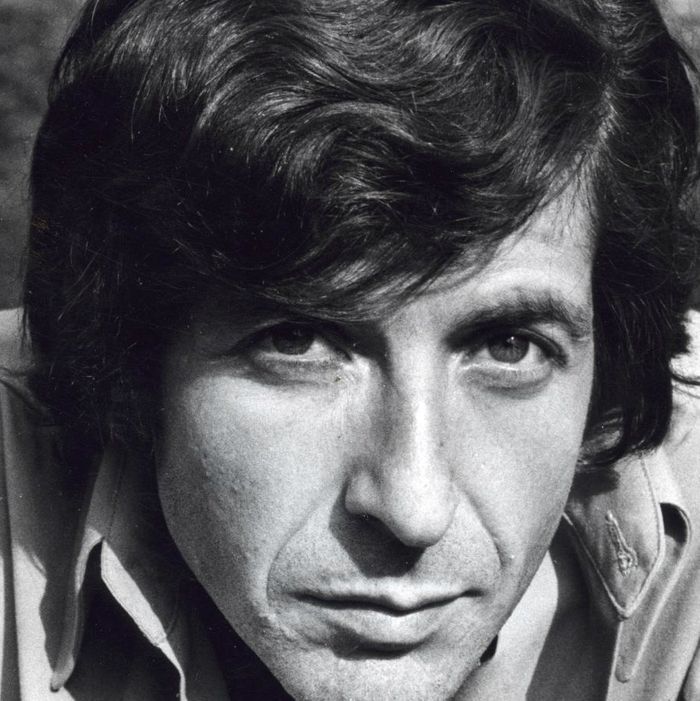
On September 21, Leonard Cohen turned 80. At an age where most people are happy just to exist able to make it down to the shops and back unassisted, Cohen historic his birthday with the release of a new studio anthology, titledPopular Bug. It'due south the 13th album in one of the most celebrated and fascinating musical careers of our time. Information technology seems similar a fine time to reverberate on his discography — and then here are the great man's 12 studio records to date, ranked from worst to best.
Contempo Songs (1979)
Our hero has never really made a flat-out bad record, only Recent Songs found him at something of a artistic impasse. After the somewhat disastrous experiment of recording with Phil Spector (on which we'll say more than soon), he returned to his trademark folk-influenced sound. And his center didn't really seem to be in it, considering Recent Songs is a mishmash of sounds and influences. The fact that Cohen rarely plays anything from this record live these days speaks to his ain displeasure with the result.
Diverse Positions (1984)
Everyone knows this every bit the ane with "Hallelujah" (and perhaps to a lesser extent, the one with "Dance Me to the Finish of Love"). Across those two songs, though, there'due south a sense that Cohen was treading water hither. Nearly ii decades into his career, he seemed ripe for a creative reinvention, which would get in four years later on in the form of "I'm Your Man."
Expiry of a Ladies' Human (1977)
This album gets a pretty raw deal from Cohen fans. It's certainly true that Phil Spector's production methods are an awkward fit with Cohen's songs, making for a strange listening experience (it's like hearing Leonard Cohen's Christmas album), and the sessions for the record were … fraught. Famously, Spector pulled a gun on Cohen, pressing it to the singer's neck and proclaiming, "Leonard, I love you." (Cohen's characteristically droll response: "I hope you practise, Phil.") Merely despite the strangeness of information technology all, in that location are some fantastic songs here, specially the epic championship rail and the startlingly bleak "Paper Thin Hotel."
Songs From a Room (1969)
Cohen's second album didn't quite lucifer the glory of his kickoff, only it'due south one worth revisiting if you haven't heard information technology for a while. Opening track "Bird on a Wire" is quite perhaps the most poetic way anyone's ever conceived of saying, "Look, I fucked up and I'k sorry." Simply this album's best moments are generally the ones where the lyrics eschew personal reflections for storytelling: "Story of Isaac" is, indeed, the biblical story of Isaac, while "The Partisan" tells the story of a French resistance fighter during WWII, and "The Butcher" — one of the strangest songs in Cohen's catalogue — seems to be from the perspective of Jesus (and, among other things, catalogues him shooting heroin).
New Pare for the Former Ceremony (1974)
The last record of the showtime role of Cohen's career, if you volition. Information technology'due south a difficult piece of piece of work to get a handle on — sonically, it's a transitional record, moving away from the simple arrangements of his early on work to a bigger, more orchestrated sound. Lyrically, the tone is curiously ribald — "Is This What You Wanted" name-checks KY Jelly, "Chelsea Hotel No. 2" famously narrates getting a blow job from Janis Joplin, and "Field Commander Cohen" describes how Leonard would amuse himself slipping acid into the punch at fancy parties. It's something of an underrated record, overshadowed by what had gone earlier and what was notwithstanding to come.
Old Ideas (2012)
Cohen's most contempo album is the well-nigh "old-style Leonard" anthology he's made in decades — the songs and arrangements here would sit comfortably with his mid-'70s output, although the lyrics are shot through with the wisdom of a man well into his 70s. (Particularly fascinating is opening runway "Going Home," which takes the form of a monologue from some higher power, reflecting on how the narrator "dearest[s] to speak with Leonard.") In that location's nothing here to rank with his very best work, but there'southward nil wrong with it, either.
The Future (1992)
The last record before our hero took to the mountain for a decade was a night, earth-weary affair — the championship rail proclaims, "I accept seen the future, brother/ Information technology is murder." Musically, The Future is a curiously mixed bag. Its strongest tracks are up with the all-time work Cohen'due south ever made, most notably "Anthem," which is certainly a contender for Best Leonard Cohen Song Ever — he described the closing lines of the chorus ("At that place is a crack in everything/ That'south how the light gets in") every bit "the closest thing I could describe to a credo." But the record's padded out past a couple of largely superfluous covers and, strangely, an instrumental, the only one of Cohen's career.
Dear Heather (2004)
The Leonard Cohen experimental record! This is a curiously underappreciated entry in Cohen's catechism — the songs are bang-up, and the music traverses an impressively broad range of sounds, from the traditionally Cohen-esque "The Faith" and "Nightingale" to tracks similar "Morning Glory" and the title tune, which deploy decidedly unconventional vocal structures and unusual arrangements. "Villanelle for Our Time," meanwhile, abandons music entirely for the starting time couple of minutes of its running time, leaving Cohen to recite the titular villanelle unaccompanied.
Songs of Leonard Cohen (1967)
Cohen was in his 30s by the time he released his debut album, which proves that it's never too late to start something, and also peradventure explains why it was such an accomplished and assured piece of work. No 1 had written songs quite like this earlier, or certainly non in the field of popular music, anyway — the lyrics were dumbo and poetic, so heavy on imagery and allusion that people still scour them for significant nearly half a century later, and nonetheless somehow, they were as well accessible and emotive. The highlights are well documented — "Suzanne," of class, along with "So Long, Marianne" and "Hey, That's No Manner to Say Goodbye" — only there really isn't a bad song here.
Songs of Beloved and Hate (1971)
The greatest accomplishment of the early part of Cohen's career. Equally its title suggests, the album divides into a "honey" side and a "hate" side, neither of which are peculiarly easy listening. The honey songs contemplate affairs that have fractured and broken, dissentious their participants in the procedure: two lovers who tin never be together ("Let'south Sing Some other Vocal, Boys"); Joan of Arc and the burn that consumed her ("Joan of Arc"); and, virtually memorably, a strange love triangle (the peerless "Famous Blueish Raincoat"). The "hate" side, meanwhile, is pretty much the most desolate Cohen always got — people who call Cohen's songs "depressing" generally only reveal that they're not listening carefully plenty, merely i could be forgiven for being somewhat downcast by listening to "Avalanche," "Last Twelvemonth'south Homo," "Dress Rehearsal Rag," and "Diamonds in the Mine" in quick succession. Of course, that doesn't stop y'all from wanting to listen to them again, and again, and once more.
I'm Your Man (1988)
The dandy reinvention. From the opening bars of "Beginning Nosotros Take Manhattan," information technology's articulate that I'grand Your Homo is very dissimilar from anything Cohen had made to this point — out went the finger-picked audio-visual guitar, in came copious synths and distinctly danceable bass lines. The lyrics constitute Cohen in playful form, too, indulging his ofttimes-underrated sense of humour more he'd ever done earlier: "Belfry of Song" was a wry, cocky-effacing reflection on advancing age and his career to date, while the aforementioned "First We Have Manhattan" found him chuckling cryptically about monkeys and plywood violins. And even so, beneath the new veneer, the songs were as moving and cute equally ever.
Ten New Songs (2001)
As the 1990s turned into the 2000s, the last the world had heard of Leonard Cohen was that he'd retreated to the Mount Baldy Zen Center and had been ordained as a Buddhist monk. At that place was no indication that he'd e'er release another album — it was almost a decade from The Time to come, an anthology pretty much everyone had assumed was his swan song. And and so, out of nowhere, this. Ten New Songs is a belatedly-career masterpiece, with arguably the strongest and nigh coherent drove of songs on whatsoever Cohen record. Those songs catalogue its creator'due south descent from the mountain back to the world — information technology's an album that finds him, in his own words, "back on Boogie Street." There'southward a sense that his years of seclusion brought insight, if no ultimate conclusions — the album looks gravely on the state of the globe, although the visceral disgust of "The Future" has been replaced with a calmer, more compassionate brand of reflection. At that place's besides a newfound sense of levity, and it seems meaning that the depression that he'd experienced for most of his developed life plainly disappeared of its own accord in the run-up to recording Ten New Songs. The contrast between nighttime and light is best embodied in the sublime "Alexandra Leaving," a vocal about resigning oneself to the cease of a love affair that'south run its course, and resolving to appreciate the love that was shared instead of mourning their loss. If there'due south a message hither, it's that life's meaning is whatever you cull it to be, and that you tin can take comfort in the fleeting moments of beauty that life has to offer. If y'all're going to have an idea abroad from a tape — or, indeed, an entire discography — you could do a lot worse.
Source: https://www.vulture.com/2014/09/12-leonard-cohen-albums-from-worst-to-best.html
0 Response to "Leonard Cohen Live From the Beacon Theater Album Art"
Post a Comment