Who Was Short Haired Girl Who Had Crush on Kiwth on Partrisge Family

Born the second son of Henry 7 and Elizabeth of York, handsome Prince Henry was not expected to become king. Yet he went on to become ane of England's most memorable monarchs – but of what of his 6 wives?
The larger-than-life grapheme of King Henry VIII (1509-47) dazzles across the centuries. He founded a national church, transformed government, built a strong Navy and encouraged a flourishing of the arts. He is also remembered for the extraordinary marital merry-get-round that saw him wed vi wives in his quest for a male heir (and ideally a spare) to secure the Tudor dynasty on England's throne.
But what of those six wives, almost hidden in Henry'southward monstrous shadow and recalled less past name than by their fates summed upwardly in the well-known rhyme: divorced, beheaded, died, divorced, beheaded, survived? Far from the puppets implied, each is a fascinating flesh-and-blood figure and each dealt differently with Henry and the challenges they faced. The consequences determined the form of royal history.
The medieval ruins of Ludlow Castle offer an evocative starting place for the wives' story. For it'due south here that the Spanish princess Catherine of Aragon was living with her husband Prince Arthur, elderberry son and heir of King Henry Vii, when Arthur was suddenly taken ill and died in 1502.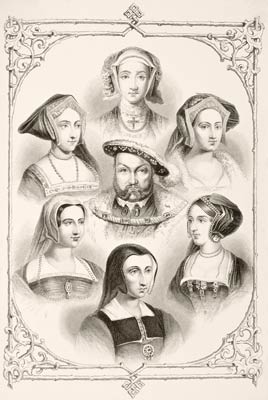
Catherine, the pretty, gracious daughter of Ferdinand of Aragon and his warrior-queen Isabella, had been married to cement a political brotherhood between Spain and England against France. At present, anile just sixteen, she was a widow in a foreign land. Merely Catherine firmly believed in her royal destiny and after seven difficult years, a papal dispensation and a deathbed wish by Henry Seven, her patience paid off. She married Arthur's brother, King Henry VIII in June 1509.
The match reaffirmed the political alliance, but eighteen-year-erstwhile Henry, 6ft 2in tall and "the handsomest sovereign", was also in love with his diminutive, auburn-haired 23-year-one-time bride. All bode well and she played the perfect wife and queen, whether devotedly embroidering her married man'due south shirts or (ever her mother's girl) vigorously supporting Henry in his military pursuits. In 1513 when the king went to fight in France, he fabricated Catherine regent in his absence, a part that she performed with aplomb.
Just there was one crucial role in which she failed: to provide Henry with a son and heir. The prince born in 1511 died inside a few months and the one surviving child from half dozen or vii pregnancies was a girl, Mary, which only would not exercise. As the queen grew older, she lost her looks and turned increasingly to her Catholic religion and study; Henry turned to mistresses.
Around 1526, the king's roving heart alighted on i of Catherine's ladies-in-waiting, Anne Boleyn. The "fresh young dryad" refused to go his mistress, provoking a frenzy of frustrated royal passion. Anne issued a breathtakingly bold ultimatum: she could only surrender to Henry'southward advances if he divorced his wife.
The rex, believing Anne would provide his male heir, entreated the Pope to declare his matrimony to his blood brother's wife invalid, just the Pope refused, sparking Henry'south break with Catholic Rome. Nor would Catherine go quietly, declaring her get-go spousal relationship had never been consummated and she was the sovereign'south 'true wife'. In May 1533, after near 24 years of matrimony, Catherine was divorced anyhow and reduced to the championship Princess Dowager.
Pious and noble to the end, she died in January 1536 at Kimbolton Castle in Cambridgeshire (now endemic past Kimbolton Schoolhouse and open up to visitors on sure days). In a last letter to Henry, she wrote, "For my part I pardon you lot everything, and I wish devoutly to pray God that He volition pardon you too." You'll notice her tomb in Peterborough Cathedral, but her ghost lingers at Kimbolton Castle.
Anne Boleyn'southward story takes us first to her childhood dwelling house, Hever Castle in Kent. Here you tin can view her portrait and likewise the Volume of Hours (prayer book) she is said to take carried to the scaffold when her royal luck ran out. A dark-eyed brunette, Anne was no conventional beauty, simply she was feisty, witty and seductive, with a chic French education caused while her begetter worked equally a diplomat in Paris.
The Boleyns were an ambitious family and Anne'due south sister Mary had already been the king's mistress. Merely Anne was the one who shrewdly won the royal hand in marriage, in January 1533 – some iv months before Henry'due south actual divorce from Catherine. Anne, 32 years old, was already flaunting her pregnancy, although the eagerly anticipated son would plough out to be another girl, Elizabeth.
The new queen was widely reviled every bit an interloper, a social climber and fifty-fifty a witch (she had a 6th finger on her left manus) who had ensnared the male monarch. People too blamed her for the religious turmoil that Henry's break with Rome unleashed. Indeed Anne was greatly attracted to the controversial religious ideas behind the Protestant Reformation; coincidentally they served her interests. It was she who had given Henry The Obedience of a Christian Homo by William Tyndale that stated the Rex, not the Pope, should take authorisation over the Church.
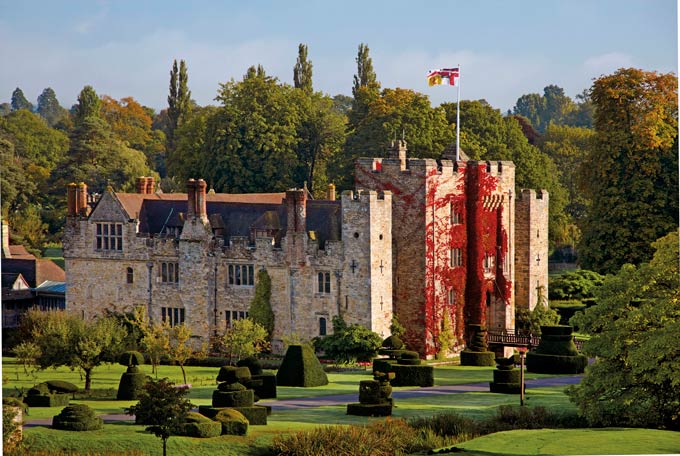
But Anne was playing a dangerous game. Without allies, she fully depended on Henry'due south favour, and as pregnancies came and went and no male person heir was produced, the male monarch's favour began to plough elsewhere. The end came 3 years into her marriage: on 19 May 1536 Anne was beheaded on London's Belfry Greenish.
Despite the trumped-up charges of adultery and treason, she showed remarkable composure on the scaffold, calling upon Jesus Christ to "salve my sovereign and principal the King, the most godly, noble and gentle prince that is." Her headless spirit is said all the same to appear near Queen'south House and lead a ghostly procession of lords and ladies downwards the aisle of the Chapel Royal of St Peter advert Vincula where she is buried.
But over a week after Anne'southward execution, Henry married Jane Seymour, a old lady-in-waiting to his first two wives. This fair, pale-skinned, blue-eyed woman of respectable nascence and standing was demure and virtuous. She was also a committed Cosmic and dared to plead with her new hubby to abandon the Dissolution of the Monasteries, perchance hoping he would return to the 'true faith'.
Her temerity earned her a stern rebuke, merely any lingering resentment was swept aside when she gave birth to Prince Edward on 12 October 1537, in the purple apartments at Hampton Court Palace. It's easy to imagine the king'southward pride and relief as the infant was baptised in the sumptuous Chapel Royal.
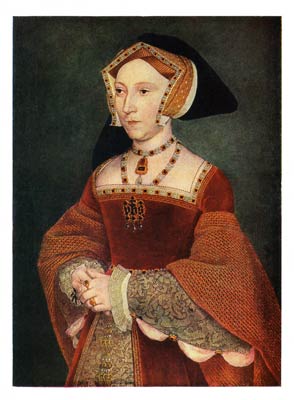
Simply even in triumph came tragedy. Jane contracted puerperal fever and died shortly after the birth. Of all Henry's spouses, it is his "near dear and entirely beloved wife" who is buried beside him in St George's Chapel, Windsor.
Concurrently courtroom advisors – and a flattering portrait past Hans Holbein – persuaded the distraught rex to take some other helpmate, who would bring with her a German language alliance. Anne of Cleves was shipped over, taking the problem showtime to study English etiquette and larn bill of fare games that Henry played, the better to please him. Unfortunately, when Henry met her in the half-timbered Former Hall behind Rochester Castle he took 1 look at her full effigy and unfashionable nighttime complexion and bluntly alleged: "I like her not."
The wedding went ahead regardless on half-dozen Jan 1540 but Henry, overcome past impotence, never consummated the union. Anne, apparently, didn't realise annihilation was amiss. Nevertheless she had the skillful sense to settle for divorce after half-dozen months, a handsome pay-off that included Hever Castle and the title of 'the Male monarch's good sister'. She never remarried and lived until 1557, a rather sad stranger in a foreign country in her twilight years.
Henry, on the rebound, became infatuated with Catherine Howard, the flighty teenage girl of the powerful Howard family unit. Her relations, spotting a superb opportunity for advancement, encouraged the match and Catherine, whatever her true feelings about marriage to a fat, 49-year-old male monarch with leg ulcers, acquiesced, becoming his fifth wife in July 1540.
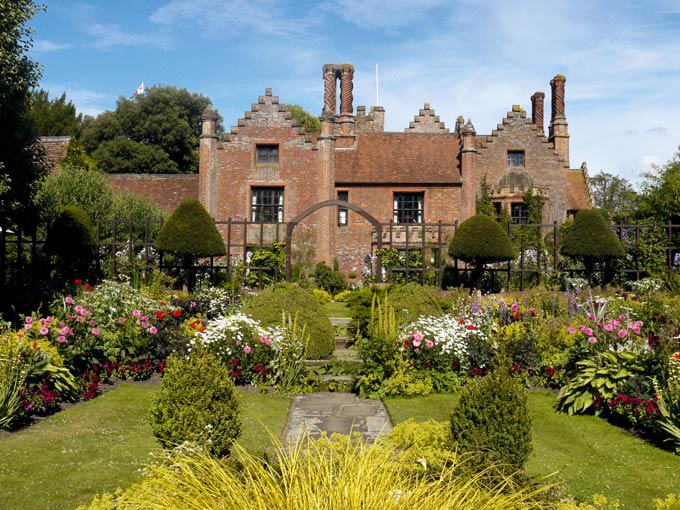
The wedlock was over before it began. Licentious by nature, Catherine recklessly took upward with a former lover, Thomas Culpeper, a trusted admirer of the rex's Privy Chamber. Visit Chenies Manor House in Buckinghamshire and mind for the ghostly footsteps crossing the gallery, said to exist Henry heading for his wife'due south room during a sojourn in that location that also included Culpeper in the royal entourage.
Then render to the Chapel Imperial at Hampton Court Palace, where Henry was informed of Catherine'due south infidelity, and the Haunted Gallery, where the queen'south ghost is said to shriek, re-enacting her desperate run to the Chapel door to plead with the king for mercy. She was executed on Tower Green on xiii February 1542.
Past now, Henry was really ailing, but he even so had an eye for the twice-widowed Katherine Parr, who came to court in 1543. Built-in at Kendal Castle 31 years earlier, Katherine was "gracious, learned and pious" with "atypical beauty, favour and a comely personage." She was also in love with Sir Thomas Seymour, brother to the tardily Queen Jane. So when the king proposed, she hesitated. Eventually – as her handwritten letter on brandish at Sudeley Castle in the Cotswolds records – she renounced her personal want and followed what she believed to be God'south will. She married Henry in July 1543 at Hampton Court Palace.
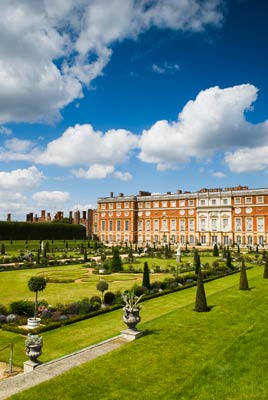
Katherine certainly lived up to her motto, "To be useful in all I practice." She acted as Queen Regent while Henry embarked on a last, cursory armed forces hurrah in French republic in 1544 and she sensitively drew together all iii of his children, Mary, Elizabeth and Edward, taking a close interest in their education.
More controversially, she began developing radical Protestant opinions that verged on the heretical. Simply her quick wits when she overstepped the mark saved her from abort: she argued that she sought to divert the king from his painful thrombosis through lively theological discussion!
When Henry died on 28 January 1547, Katherine hastily rekindled her romance with Seymour, married and retired pregnant to the Seymour dwelling house at Sudeley Castle. Simply she died following the birth of her daughter, in September 1548. Katherine received the outset-ever Protestant royal funeral and her tomb is in St Mary's Church in the castle'south beautiful gardens.
Half-dozen wives, half-dozen very unlike characters who influenced the king and history in a tale full of 'what ifs' and ironies. Not to the lowest degree is the irony that, despite Henry's hankering for male heirs, his daughter by Anne Boleyn would prove to be ane of England's greatest monarchs: Elizabeth I.
Buy the latest upshot of BRITAIN magazine at present
Download BRITAIN Magazine to your mobile today

 No mobile device? Purchase directly on Zinio for your desktop!
Source: https://www.britain-magazine.com/features/history/tudors/divorced-beheaded-survived-the-wives-of-henry-viii/
0 Response to "Who Was Short Haired Girl Who Had Crush on Kiwth on Partrisge Family"
Post a Comment